

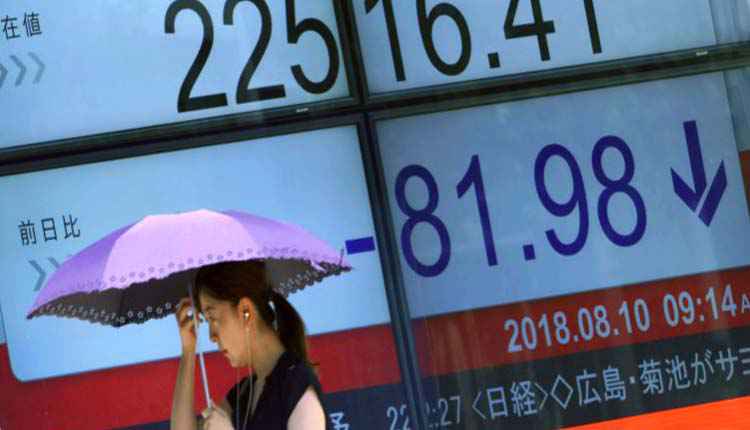
Easy Trading Tips – Asian equities showed mixed performance on Thursday, as regional indices mostly mirrored overnight gains on Wall Street. Despite fresh tariff threats from former U.S. President Donald Trump, investor sentiment remained cautiously optimistic, with attention turning to trade figures from China and Australia.
Wall Street closed in positive territory Wednesday, shrugging off Trump’s announcement of a sweeping 100% tariff on foreign-made semiconductors. Market optimism was buoyed by Apple’s (NASDAQ:AAPL) pledge to boost U.S. manufacturing with a $100 billion investment.
U.S. futures posted mild gains in Asian hours.
Trump’s Tariff Push Targets Semiconductors and Indian Imports
In a new round of trade actions, Trump unveiled a proposed 100% duty on imported semiconductors—excluding those manufactured within the U.S. Additionally, he imposed a 25% tariff on selected Indian imports, citing India’s continued purchases of Russian oil. This brings the total tariff burden on specific Indian goods to 50%, marking one of the toughest stances taken against a trading partner.
Despite escalating trade friction, risk appetite in the region remained intact.
Market Overview: Gains in Japan and South Korea, Losses in China and Australia
Japan’s Nikkei 225 climbed 0.7%, while the TOPIX advanced 0.8%, supported by tech stocks and exporters.
South Korea’s KOSPI gained 0.5%, and Singapore’s Straits Times Index rose 0.6%.
India’s Nifty 50 futures nudged 0.1% higher after the Reserve Bank of India left interest rates unchanged as anticipated.
In contrast, China’s Shanghai Composite dipped 0.1%, and the CSI 300 declined 0.3%.
Hong Kong’s Hang Seng eased 0.1%, reflecting caution ahead of Chinese trade data.
Australia’s S&P/ASX 200 slipped 0.2%, as investors digested trade numbers and looked ahead to the RBA’s policy decision next week, where another rate cut is widely expected.
Eyes on Trade Reports from China and Australia
Australia reported a larger-than-expected trade surplus for June, fueled by a rebound in exports and a drop in imports. The data added to speculation that the Reserve Bank of Australia may take a dovish stance in its upcoming meeting.
Meanwhile, markets await July’s trade balance report from China, which is expected to offer clues on how escalating U.S. tariffs are affecting the nation’s export momentum.